What Is Kundali Matching and Why Does It Matter?
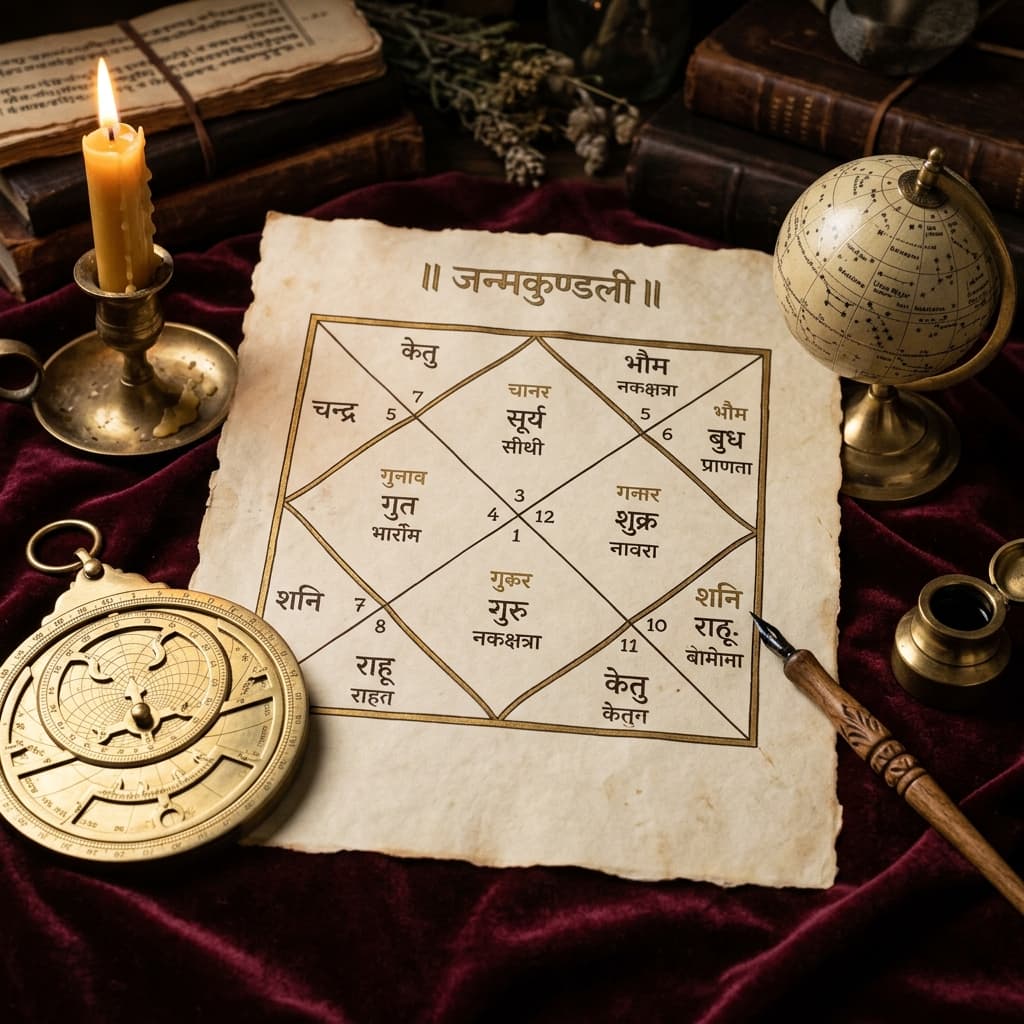
Kundali matching — also known as Gun Milan, Horoscope Matching, or Patrika Milan — is one of the most sacred and scientifically grounded traditions in Vedic astrology. Before two individuals are united in marriage, their Janma Kundalis (birth charts) are compared to evaluate compatibility across multiple dimensions of life.
This is not a mere formality or outdated ritual. In Vedic philosophy, marriage is considered one of the most consequential decisions a person makes — affecting health, wealth, emotional well-being, progeny, and spiritual growth for decades. Kundali matching provides a systematic, data-driven framework for assessing whether two individuals are likely to experience harmony or friction in their union.
The process evaluates the positions of the Moon, Mars, and other Grahas (planets) at the exact time and place of each person's birth. By cross-referencing these positions through established compatibility frameworks, an experienced Vedic astrologer can identify areas of natural alignment, potential challenges, and — crucially — whether those challenges have effective remedies.
In modern India, where families increasingly seek the guidance of the best astrologer for marriage matching, Kundali matching remains the gold standard for pre-marital compatibility assessment.
The Science Behind Ashtakoot Milan: The 36-Point System
The most widely used framework for Kundali matching is the Ashtakoot Milan system — literally meaning "eight-factor compatibility." This system evaluates the birth charts of both individuals across eight distinct parameters (called Gunas or Koots), each carrying a specific point value. The maximum possible score is 36 points.
Here is a brief overview of each of the eight Gunas:
1. Varna (1 Point) — Spiritual Compatibility
Varna assesses the spiritual and ego compatibility of the couple. The four Varnas — Brahmin, Kshatriya, Vaishya, and Shudra — are mapped to specific Nakshatras. When the groom's Varna is equal to or higher than the bride's, compatibility is considered favourable.
2. Vashya (2 Points) — Mutual Attraction & Influence
Vashya evaluates the degree of mutual attraction, dominance, and magnetic pull between partners. It categorises Moon signs into five types — Manav (human), Vanchar (wild), Chatushpad (quadruped), Jalchar (aquatic), and Keeta (insect) — and checks their natural compatibility.
3. Tara (3 Points) — Health & Well-Being
Tara compatibility is calculated by counting the Nakshatras from the bride's birth star to the groom's and vice versa, then dividing by 9. This predicts the couple's health, longevity, and overall well-being within the marriage.
4. Yoni (4 Points) — Physical & Intimate Compatibility
Each Nakshatra is associated with an animal yoni (nature). This Guna assesses physical compatibility, sexual harmony, and the instinctive comfort level between partners. There are 14 animal types, and their mutual relationships determine the score.
5. Graha Maitri (5 Points) — Mental Compatibility
Also called Rashyadhipati, this evaluates the friendship between the ruling planets (lords) of each person's Moon sign. When the Moon sign lords are friends or neutral, intellectual and emotional compatibility is indicated. This is one of the most important Gunas for long-term marital harmony.
6. Gana (6 Points) — Temperament Matching
Gana divides Nakshatras into three temperament categories — Deva (divine/gentle), Manushya (human/balanced), and Rakshasa (intense/assertive). Matches between same Ganas score highest. A Deva-Rakshasa combination requires careful analysis, as it indicates fundamentally different approaches to life.
7. Bhakoot (7 Points) — Prosperity & Family Harmony
Bhakoot examines the relative positions of the Moon signs and predicts the couple's financial prosperity, family harmony, and likelihood of progeny-related challenges. Certain Moon sign combinations (like 6-8 or 9-5 positions) are considered Bhakoot Dosha and require expert assessment.
8. Nadi (8 Points) — Genetic & Health Compatibility
Carrying the highest weight in the system, Nadi evaluates genetic and physiological compatibility. The three Nadis — Aadi (Vata), Madhya (Pitta), and Antya (Kapha) — correspond to Ayurvedic body constitutions. When both partners share the same Nadi, it is called Nadi Dosha, which can indicate health challenges for offspring. This is the single most scrutinised factor in Kundali matching.
Interpreting the Kundali Matching Score
After evaluating all eight Gunas, the total score determines the recommended course of action:
- Below 18 points: The match is generally considered incompatible. Marriage is not advisable unless an expert identifies strong compensating factors in the detailed chart analysis.
- 18 to 24 points: An acceptable match. Most marriages in this range can succeed, especially with awareness of the weaker areas and appropriate remedies.
- 24 to 32 points: A very good match with strong compatibility across most dimensions. This range is considered ideal for a harmonious marriage.
- 32 to 36 points: An exceptional match. Such high compatibility is rare and indicates natural alignment across virtually all life areas.
However, experienced astrologers like Acharya R.K. Mishra emphasise that the raw score alone is never the complete picture. A 28-point match with Nadi Dosha may be more concerning than a 20-point match with perfect Nadi compatibility. Context, compensating Yogas, and ongoing Dasha periods all influence the final assessment.
Beyond the Score: What Numbers Don't Tell You
While the Ashtakoot system provides a robust quantitative framework, a truly comprehensive Kundali matching assessment examines several additional factors that the 36-point system does not capture:
Manglik Dosha (Kuja Dosha)
When Mars occupies certain houses (1st, 2nd, 4th, 7th, 8th, or 12th) in a person's birth chart, they are considered Manglik. If one partner is Manglik and the other is not, traditional texts warn of potential conflicts, health issues, or marital discord. However, an experienced astrologer evaluates the strength of Mars, its aspects, and whether the Dosha has been naturally cancelled by other planetary positions — which happens more often than many people realise.
Dasha Period Compatibility
The Vimshottari Dasha system reveals which planetary period each person will be experiencing during the early years of marriage. Even a high-scoring match can face turbulence if both partners simultaneously enter challenging Dasha periods (such as Saturn or Rahu Mahadasha). Conversely, favourable Dasha alignment can strengthen a moderate match significantly.
7th House Analysis
The 7th house in a Janma Kundali is the house of marriage and partnerships. Its lord, the planets placed within it, and the aspects it receives all provide crucial insights into the nature, timing, and quality of married life — information that the Ashtakoot system alone cannot provide.
Navamsha (D-9) Chart
The Navamsha divisional chart is specifically used for marriage analysis. An experienced astrologer examines the D-9 chart of both partners to assess the deeper, post-marriage dynamics — including emotional bonding, trust, and the evolution of the relationship over time.
Manglik Dosha: Separating Facts from Fear
No topic in marriage astrology generates more anxiety than Manglik Dosha. Many families have seen promising alliances fall apart over fears of this planetary combination. Let us separate the facts from the fear:
The reality: Approximately 40-50% of the population has Mars in one of the "Manglik" houses. If Manglik Dosha were truly as dangerous as commonly feared, half of all marriages would be doomed — which is clearly not the case.
What matters is the degree of Manglik influence:
- Mild Manglik: Mars in the 1st or 2nd house often has minimal practical impact, especially after the age of 28 when Mars matures.
- Moderate Manglik: Mars in the 4th or 12th house requires assessment but often has natural cancellations through Jupiter's aspect, Venus conjunction, or Mars being in its own sign.
- Strong Manglik: Mars in the 7th or 8th house is the most significant and requires careful analysis. Even here, matching with another Manglik individual or specific planetary remedies can effectively neutralise the Dosha.
The key takeaway: never reject a marriage alliance based solely on Manglik Dosha without consulting a qualified astrologer who can assess the full chart context. Many so-called Manglik charts have natural cancellations that inexperienced practitioners miss entirely.
When to Seek Expert Kundali Matching
While free online Gun Milan calculators can generate an Ashtakoot score, they cannot replace the contextual analysis that an experienced astrologer provides. You should seek professional Kundali matching when:
- The online score is borderline (16-20 points): An expert can identify compensating factors or hidden strengths that software cannot detect.
- Nadi or Bhakoot Dosha is indicated: These high-weight Doshas require expert assessment to determine whether natural cancellations exist.
- One or both partners are Manglik: Professional evaluation of the Mars placement's strength, aspects, and cancellations is essential.
- Families disagree about the match: An authoritative, detailed analysis from a respected astrologer can provide clarity and confidence to all parties.
- Delay in marriage: If one partner has experienced persistent delays in finding a suitable match, a comprehensive Kundali analysis can identify the astrological reasons and recommend effective remedies.
Acharya R.K. Mishra's Kundali matching consultations go far beyond the standard 36-point analysis. With over 35 years of experience and thousands of successful marriage assessments, he examines the Ashtakoot score, Manglik status, Dasha compatibility, 7th house dynamics, and Navamsha chart — providing a complete, nuanced evaluation that gives families genuine confidence in their decision.
What to Expect from a Professional Kundali Matching Session
A thorough Kundali matching consultation with a qualified Vedic astrologer typically includes:
- Detailed Ashtakoot Analysis: A breakdown of all 8 Gunas with individual scores and their practical implications for daily married life.
- Dosha Assessment: Complete evaluation of Manglik Dosha, Nadi Dosha, and Bhakoot Dosha — including whether natural cancellations exist.
- Dasha Period Alignment: Analysis of both partners' upcoming planetary periods and how they interact during the critical early years of marriage.
- 7th House & Navamsha Examination: Deep-dive into the marriage-specific houses and divisional charts for long-term compatibility insights.
- Muhurat Recommendation: If the match is favourable, the astrologer can recommend the most auspicious wedding dates and times.
- Remedial Measures: For areas of weakness, specific remedies — such as mantra chanting, gemstone recommendations, or ritual observances — are prescribed to strengthen the union.
The entire process typically takes 60 to 90 minutes and requires the exact birth details (date, time, and place) of both individuals. Whether conducted in person at the Ratna Mani office in Hinjewadi, Pune, or via Zoom for clients in other cities, the depth and accuracy of the analysis remains identical.
For families seeking the most thorough and trustworthy Kundali matching assessment, consulting an astrologer with genuine Guru-Parampara credentials and decades of active practice is the single most important step you can take to ensure a harmonious, prosperous, and blessed marriage.