What Is Vastu Shastra? The Ancient Science of Spatial Harmony
Vastu Shastra — literally "the science of architecture" — is an ancient Indian system of spatial design and directional alignment that dates back over 5,000 years to the Vedic period. Rooted in the same philosophical tradition as Ayurveda and Vedic astrology, Vastu governs how the energy (Prana) flows through a built environment and how that flow directly impacts the health, prosperity, relationships, and mental well-being of its occupants.
Unlike modern interior design, which focuses primarily on aesthetics and functionality, Vastu Shastra addresses the invisible but powerful relationship between a structure and the five fundamental elements of nature — Earth, Water, Fire, Air, and Space. When a home or office is aligned with these elemental forces and the cardinal directions, it creates a harmonious environment that supports the occupants' goals. When it is misaligned, the resulting Vastu Dosha (spatial defect) can manifest as persistent financial difficulties, health issues, family discord, or career stagnation.
This is why thousands of families and business owners across India seek the guidance of a certified Vastu consultant — not as a luxury, but as a practical investment in their long-term well-being.
The Five Elements (Panch Tatva) in Vastu Shastra
Every principle in Vastu Shastra is derived from the interplay of the Panch Tatva — the five elements that constitute all matter in the universe. Understanding these elements is essential to grasping why specific directional rules exist:
1. Earth (Prithvi) — South-West
Earth represents stability, grounding, and strength. The South-West zone of any structure is governed by the Earth element. This is why Vastu prescribes placing the master bedroom, heavy furniture, and storage in the South-West — to anchor the home's energy and provide a sense of security to its occupants.
2. Water (Jal) — North-East
Water symbolises clarity, wisdom, and purification. The North-East (Ishan) corner is the most sacred zone in Vastu. It should be kept clean, light, and open. Water features, prayer rooms, and meditation spaces are ideally placed here. Blocking or cluttering the North-East is one of the most common Vastu doshas found in Indian homes.
3. Fire (Agni) — South-East
Fire represents energy, transformation, and metabolism. The kitchen and all heat-generating equipment should be positioned in the South-East. Placing the kitchen in the North-East or South-West creates an elemental conflict that can affect the family's health and financial stability.
4. Air (Vayu) — North-West
Air governs movement, social connections, and change. Guest rooms, children's bedrooms, and storage of items in transit are best placed in the North-West zone. This direction also influences business relationships and networking opportunities.
5. Space (Akash) — Centre (Brahmasthan)
Space represents expansion and openness. The centre of a home or office — called the Brahmasthan — should ideally be open, well-lit, and free of heavy construction like pillars, staircases, or toilets. A clean Brahmasthan allows energy to circulate freely throughout the entire structure.
Vastu for Your Home: A Room-by-Room Guide
Applying Vastu Shastra for home does not require rebuilding your house from scratch. Here are the key directional principles for each room:
Main Entrance
The entrance is the mouth of the home — it determines the quality of energy that enters. North, East, or North-East facing entrances are considered most auspicious. The entrance should be well-lit, obstruction-free, and larger than any other door in the house. A threshold (door sill) is recommended to prevent negative energy from flowing in.
Master Bedroom
The ideal position is the South-West. The bed should be placed so the head points South or East while sleeping. Mirrors should not face the bed. Electronics should be minimised, and the room should use warm, calming colours — earthy tones, soft greens, or pastel shades.
Kitchen
The kitchen belongs in the South-East. The cook should face East while preparing food. The gas stove should not be directly adjacent to the water sink (fire and water elements in conflict). Storage of grains and provisions is best in the South-West corner of the kitchen.
Pooja Room (Prayer Space)
The North-East is the ideal location. Idols and sacred images should face West or East (so the worshipper faces East or West respectively). The pooja room should never share a wall with a bathroom or be placed under a staircase.
Bathroom & Toilet
The North-West or West zones are suitable. Toilets in the North-East or Brahmasthan are significant Vastu doshas that require immediate remediation. The toilet seat should ideally face North-South, not East-West.
Vastu for Office and Business Spaces
Vastu for office environments follows the same elemental principles but with specific adaptations for commercial success:
- Owner/Director's Cabin: Should be in the South-West — the zone of strength and authority. The desk should face North or East. The owner should have a solid wall behind their chair (not a window or glass partition), symbolising support and stability.
- Finance & Accounts Department: Best placed in the South-East or North. The cash safe or accounts server should be positioned so it opens toward the North — the direction of Kubera (the deity of wealth).
- Reception & Entrance: Should face North or East. A welcoming, clutter-free reception with proper lighting creates a positive first impression and attracts favourable business energy.
- Conference Room: Ideally in the North-West, facilitating productive discussions, negotiations, and partnerships. The head of the table should sit facing East or North.
- Pantry/Kitchen Area: Placed in the South-East, consistent with the fire element principle.
- Server Room/Heavy Equipment: Best in the South or South-West, where the Earth element provides grounding for heavy infrastructure.
Many IT companies, startups, and established businesses in Pune — including several in Hinjewadi's tech parks — have consulted Acharya R.K. Mishra for office Vastu assessments, often reporting noticeable improvements in business performance within 2-4 months of implementing the recommended corrections.
Common Vastu Doshas and Their Non-Demolition Remedies
The most frequently encountered Vastu doshas in Indian homes and offices — and their practical, non-demolition remedies:
1. Toilet in the North-East
Impact: Financial losses, health issues, spiritual blockages. Remedy: Place a Vastu pyramid or crystal in the affected area. Keep a bowl of sea salt that is replaced weekly. Ensure the space is exceptionally clean and well-ventilated. If structurally feasible, convert it to a storage area.
2. Kitchen in the North-East
Impact: Digestive health problems, mental tension, financial instability. Remedy: Use yellow or green coloured tiles/accessories to reduce the fire-water elemental conflict. Place a small bowl of water with floating flowers near the cooking area.
3. Cut or Extended Corners
Impact: Varies by direction — a cut North-East affects prosperity and clarity; a cut South-West undermines stability. Remedy: Use mirrors strategically to create a visual extension of the missing corner. Place Vastu symbols or plants (such as Tulsi for North-East) to energise the zone.
4. Staircase in the Centre (Brahmasthan)
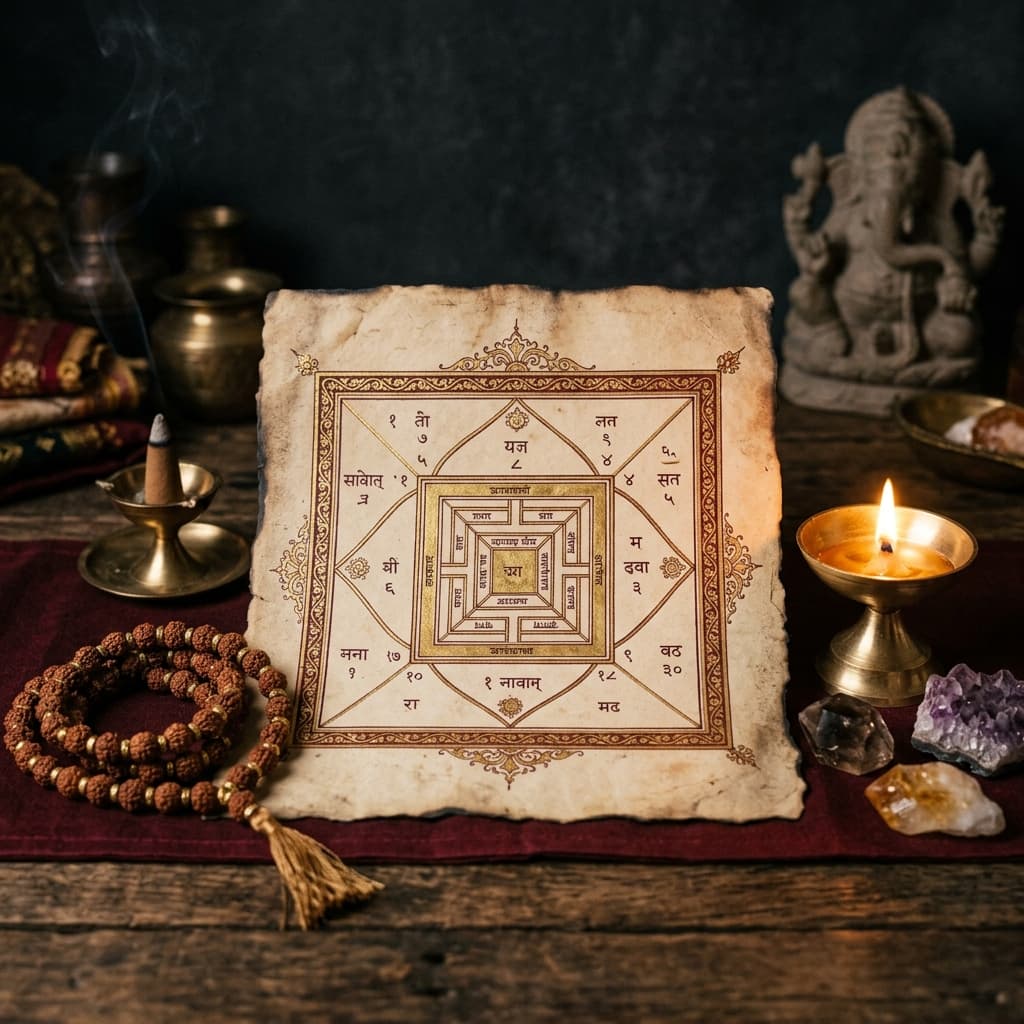
Impact: Health issues for all family members, persistent obstacles. Remedy: Use specific lighting and colour therapy to counterbalance the energy blockage. A Vastu Shanti Yantra placed nearby can help restore energy flow.
5. Bedroom Above the Kitchen
Impact: Sleep disorders, irritability, relationship strain. Remedy: Use cooling colours (light blue, white) in the bedroom. Place a copper plate under the bed to ground excess fire energy from below.
A certified Vastu consultant like Acharya R.K. Mishra specialises in identifying the specific doshas present in your property and prescribing targeted, practical remedies that require no demolition — only strategic adjustments to colours, placements, symbols, and elements.
What to Expect from a Professional Vastu Consultation
A comprehensive Vastu Dosha Nivaran consultation typically follows this structured process:
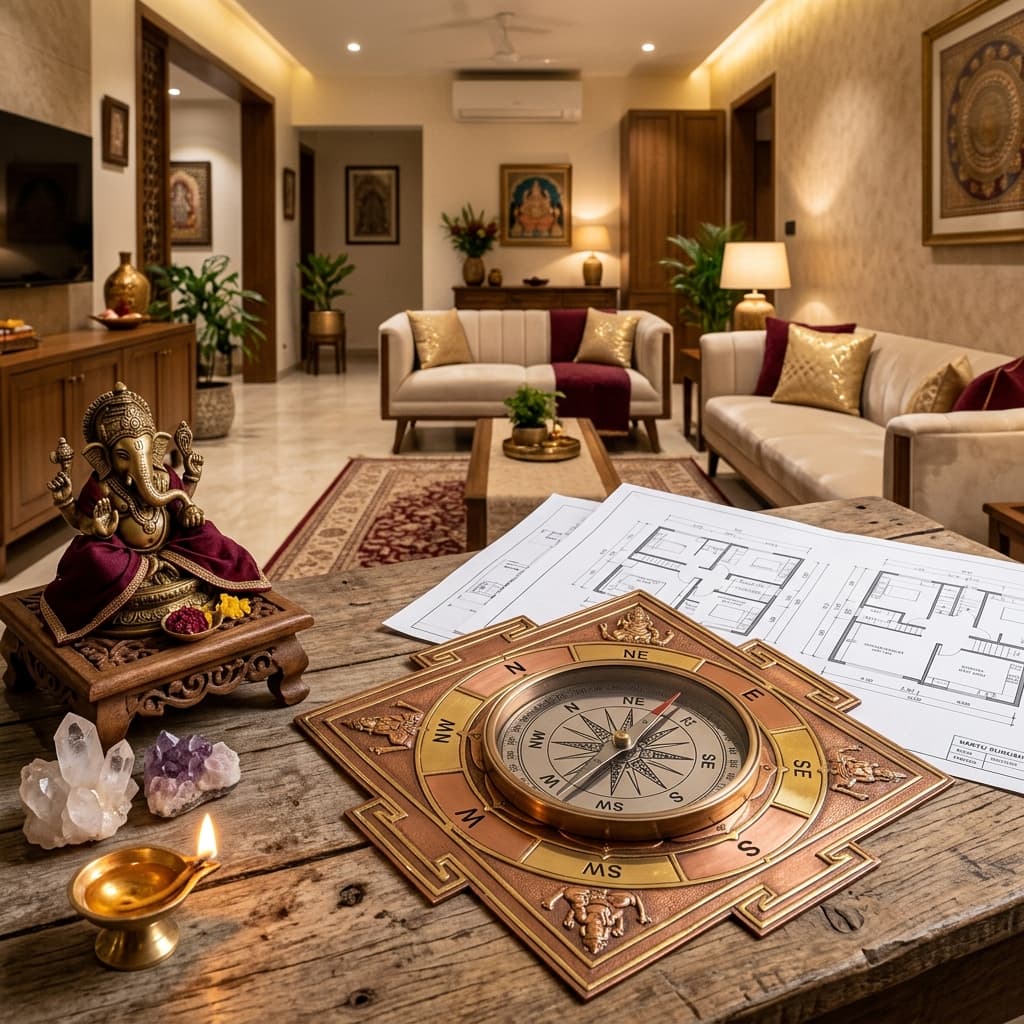
- Site Assessment: The consultant takes compass readings at multiple points in the property to determine the exact directional alignment. Floor plans are analysed against Vastu principles.
- Zone-by-Zone Audit: Each room and functional area is evaluated for elemental alignment, directional compliance, and potential doshas. Photographs and measurements are documented.
- Occupant Interview: The consultant asks about specific challenges the occupants have been facing — financial, health, relationship, or career-related — and correlates these with the identified spatial imbalances.
- Astrological Cross-Reference: An experienced Vastu expert like Acharya Mishra also examines the Janma Kundali of the primary occupant to identify whether planetary periods are amplifying certain Vastu doshas.
- Remediation Plan: A detailed, prioritised list of non-demolition corrections — including colour changes, furniture repositioning, element placement, and symbolic corrections — is provided with clear implementation instructions.
- Follow-Up: A follow-up consultation (typically after 2-3 months) assesses the impact of the changes and fine-tunes any remaining imbalances.
For properties in Pune and surrounding areas, Acharya R.K. Mishra conducts on-site visits personally. For clients outside Pune, a remote Vastu consultation via video call using floor plans, photographs, and compass readings is equally effective.
Common Misconceptions About Vastu Shastra
Several myths prevent people from benefiting from Vastu Shastra. Let us address the most common ones:
"Vastu corrections require demolishing and rebuilding"
This is the biggest misconception. An experienced Vastu consultant can resolve the vast majority of doshas through strategic adjustments — colour therapy, element placement, furniture repositioning, mirrors, crystals, and Yantras. Structural demolition is almost never necessary.
"Vastu is only for new constructions"
Vastu corrections can be applied to existing homes, offices, factories, and even rented properties. In fact, most consultations are for existing properties where occupants have noticed persistent challenges.
"Vastu conflicts with modern architecture"
Vastu principles are remarkably adaptable. An experienced consultant works within the existing architectural constraints, finding creative solutions that honour both structural realities and Vastu principles. The goal is harmony, not rigid conformity.
"South-facing houses are always bad"
This is an oversimplification. A South-facing house with a properly designed entrance, correct room placements, and a clean North-East zone can be perfectly auspicious. The direction of the entrance is just one of many factors — the overall spatial harmony matters far more.